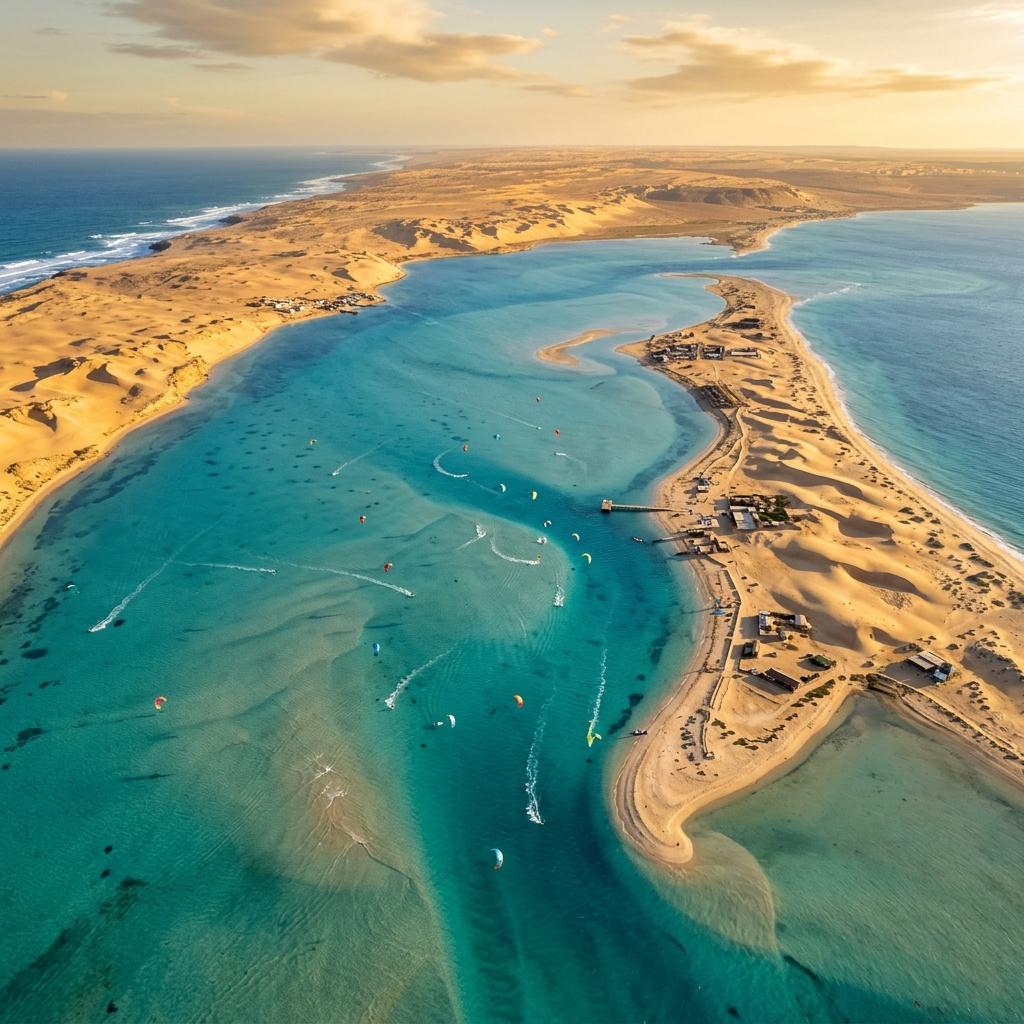
Dakhla sits on a narrow peninsula jutting into a vast lagoon in southern Morocco, and it is one of the most geographically gifted kitesurf locations on the planet. The Saharan trade wind system delivers north-northeasterly winds with a consistency that simply does not exist in European spots: 320+ windy days per year, with averages sitting comfortably between 18 and 28 knots. The lagoon is enormous, shallow, and flat, a natural teaching tank of almost absurd dimensions.
The Lagoon: Why Dakhla is Special
The Dakhla lagoon stretches over 40km in length and sits mostly at knee-to-thigh depth across its inland zones. The surface on classic trade wind days is remarkably flat, almost lake-like in the sheltered central sections. For beginner kitesurfers, this translates into extended body-dragging sessions and water starts without wrestling swell or navigating current. For advanced freeride and freestyle riders, the open Atlantic ocean side of the peninsula delivers powerful rolling chop and occasional waves. Dakhla caters to both in a way almost no other destination on Earth does simultaneously.
Wind Reliability
Dakhla's wind is driven by the Saharan High, a persistent high-pressure system over the African desert that generates reliable trade winds blowing from the north-northeast. Unlike thermal winds (which are restricted to afternoon windows), the Dakhla trades blow throughout the day. Early morning sessions are entirely normal. The peak months of November through April deliver the most powerful winds, typically 20 to 30 knots, while the summer months are slightly lighter at 15 to 22 knots but still highly consistent. Very few places on Earth match this level of year-round wind reliability.
Getting to Dakhla
Dakhla Airport (VIL) receives direct charter and scheduled flights from several European cities, with Royal Air Maroc operating connections via Casablanca. Several Dakhla-focused kite camps offer airport transfers as part of all-inclusive packages, which is the most practical way to handle logistics in a remote destination.
Most visitors stay at one of the lagoon-side kite camps, which provide accommodation, meals, equipment, and instruction in a single package. This all-inclusive model suits Dakhla well, as the remoteness of the location makes self-organising significantly more complex than a European destination.
Dakhla vs European Destinations
Dakhla wins on raw wind reliability and flat water quality. No European destination comes close on those metrics. The trade-off is logistical complexity, cost (camp packages run around 1,200 to 2,000 euros per week all-in), and the need to fly to a genuinely remote location. For riders planning a dedicated kitesurf trip, Dakhla is extraordinary. For those integrating a kitesurf course with a broader European trip, Portugal, particularly northern Portugal, offers a more accessible combination of excellent conditions and cultural richness.