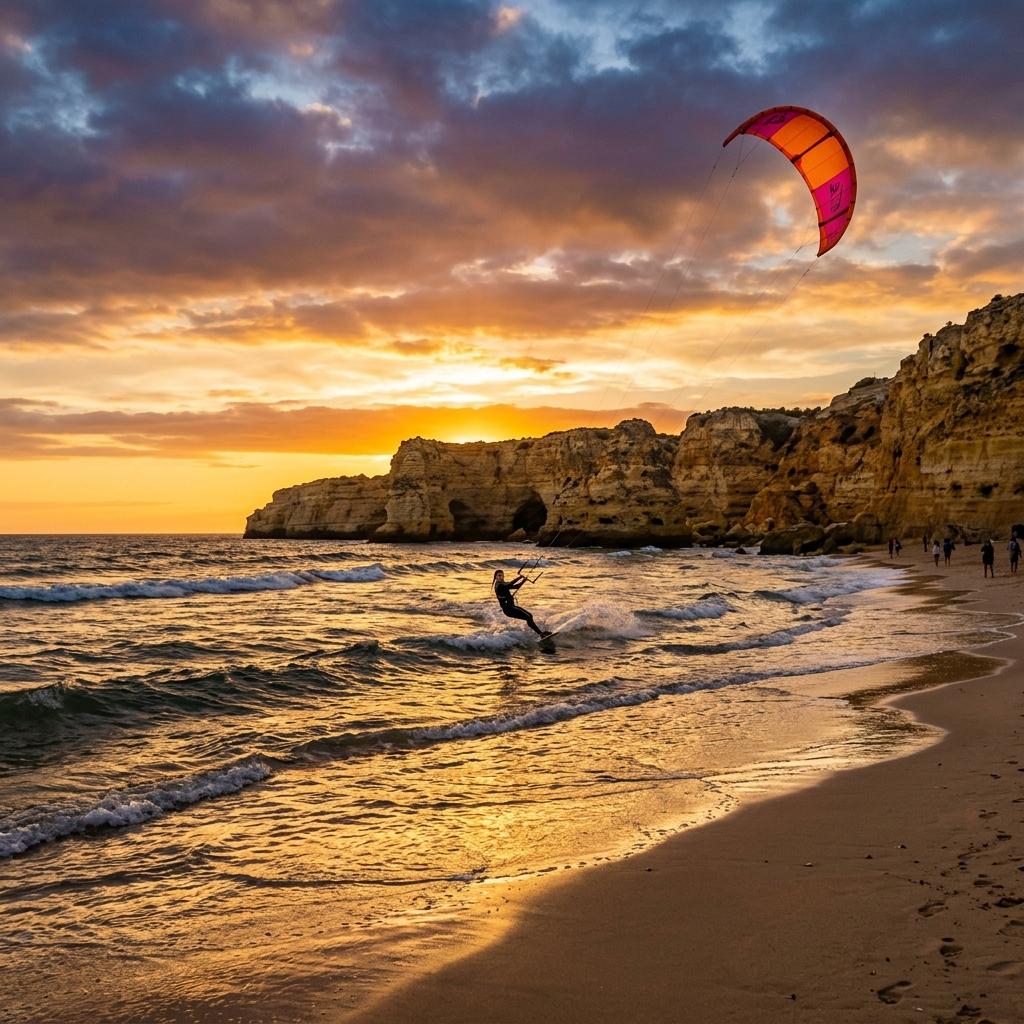
Kitesurfing in Portugal has quietly become one of Europe's most compelling watersport pilgrimages. With over 850km of Atlantic coastline, a reliable thermal wind engine that runs like clockwork from June through September, and an infrastructure of elite schools that punches well above its weight, Portugal sits comfortably in the global top five for kitesurf destinations. Whether you're a first-timer looking for your first beach start or an experienced freerider chasing consistent 20-knot thermals, the right region of Portugal has something extraordinary to offer.
Why Portugal is a World-Class Kitesurf Destination
The Atlantic Ocean dominates Portugal's western edge. That exposure is the engine of everything. Unlike the enclosed Mediterranean, Portugal's coastline faces open ocean fetch, which means swells, pressure systems, and importantly, thermally-driven wind patterns that develop with remarkable regularity every summer afternoon.
The "Nortada" is the name locals give to the prevailing northerly thermal wind that builds along Portugal's west coast during the summer months. It typically activates around 11am to 1pm and builds steadily to its peak of 18-25 knots by mid-afternoon, before easing at sunset. This predictability is gold for kiters : you can plan your days with confidence, knowing the window will open.
Add to this year-round mild temperatures, low rainfall in summer, excellent infrastructure, affordable cost compared to Western European alternatives, and a thriving community of certified schools, and Portugal's credentials are obvious. The country has produced multiple world-class freestylers and is home to some of the most respected IKO instruction facilities in Europe.
The Best Kitesurfing Spots in Portugal
Moledo (Northern Portugal : #1 Pick)
Situated at the mouth of the Minho river, directly on the Spanish border, Moledo is the undeniable crown jewel of Portuguese kitesurfing. The beach is vast : several kilometres of pristine north-facing sand : and crucially, it sees a fraction of the foot traffic of southern alternatives. The Nortada funnels through the elevated terrain behind the beach and accelerates measurably, making Moledo consistently windier than surrounding spots. The river mouth creates a natural shallow-water lagoon ideal for beginners, while the open ocean side caters to experienced riders. Difficulty: Beginner-Advanced. Best season: June-September.
Viana do Castelo
Just 20km south of Moledo, Viana do Castelo is the regional capital and offers solid kitesurf conditions on its long estuary beach. The wind is slightly less powerful than Moledo due to less terrain channeling, but conditions are still very good in summer. Difficulty: Beginner-Intermediate. Best season: July-August.
Guincho (Lisbon Area)
Guincho is beautiful and iconic : dramatic dunes, powerful Atlantic swells, and consistent strong winds. But strong is the operative word. Guincho can reach Beaufort 6-7 regularly, making it a poor choice for beginners or even lower-intermediates. The beach is also significantly busier with surfers, swimmers, and general tourists. For experienced freeriders who want power, Guincho is a legendary session. Difficulty: Advanced. Best season: April-October.
Algarve
The Algarve gets the tourists, the media exposure, and the crowded lineups. Spots like Lagos, Meia Praia, and Ferragudo have operational kite schools, but the sheer density of people in peak season turns beaches into obstacle courses. The wind can also be gustier and more inconsistent, influenced by local topography rather than clean Nortada thermals. Difficulty: All levels (but crowded). Best season: May-September.
| Spot | Best Season | Difficulty | Crowds |
|---|---|---|---|
| Moledo | Jun-Sep | Beginner-Adv | Low ✓ |
| Viana do Castelo | Jul-Aug | Beginner-Int | Medium |
| Guincho | Apr-Oct | Advanced | Medium |
| Algarve | May-Sep | All levels | High ✗ |
When to Go: Portugal Kitesurf Seasons
June-September (Nortada Peak): This is the money window. The Nortada thermal activates reliably across all northern coast spots. Average wind speeds sit at 15-25 knots on most days. Water temperature reaches 18-20°C, making a 3/2mm wetsuit sufficient. August is the busiest month for tourism across Portugal, so plan your accommodation well in advance if you're targeting Moledo or Viana. September is a local favourite : the Nortada is still firing but the beaches are noticeably quieter.
October-March (Atlantic Season): The Nortada retreats but the Atlantic swell season arrives. Winds become stronger, more variable, and predominantly from the southwest. This suits advanced wave riders rather than beginners. Water drops to 15°C : you'll want a 5/4mm wetsuit. The upside: zero crowds, dramatically cheaper accommodation, and an entirely different and raw beauty to the coastline.
April-May & October (Shoulder Season): Transitional winds, genuinely mild weather, uncrowded beaches, and best-value accommodation. Conditions are unpredictable enough that you wouldn't book a strict 5-day beginner course, but for an intermediate or advanced rider with flexibility in their schedule, shoulder season Portugal is excellent value. See our full month-by-month seasonal breakdown →
North vs South: Which Region Is Right For You?
| North (Moledo) | South (Algarve) | |
|---|---|---|
| Wind Reliability | ★★★★★ | ★★★☆☆ |
| Crowds | Low : ideal | High in summer |
| Beginner Friendly | Yes (flat lagoon) | Moderate |
| Cost | Mid-range | Higher (tourist premium) |
| Scenery | Dramatic, rugged | Beautiful, busy |
The Best Kitesurf Schools in Portugal
Our full review of the best kitesurf schools in Portugal runs through each option in detail, but the summary is clear: the highest-quality instruction, in the most optimal conditions, with the lowest student density, is found in the north. Discover the Northern Portugal kite scene →
Looking for the best school in Northern Portugal?
We've reviewed every major operation on Portugal's west coast. One stands out for wind reliability, low crowds, and instruction quality.
See our top-rated pick →Planning Your Trip: Practical Info
Flights: Porto (OPO) is the closest international hub for northern Portugal spots including Moledo, Viana do Castelo, and the Minho coast : approximately 1h 15min drive to Moledo via the A28. Lisbon (LIS) works for Guincho and central coast spots. Budget airlines connect most European cities to Porto and Lisbon year-round.
Getting Around: A hire car is strongly recommended, especially for northern spots. The A28 coastal motorway is fast and well maintained. Public transport exists but limits flexibility between beaches.
Accommodation: Options near Moledo range from beachside campsites (budget, very popular with kiters) to mid-range guesthouses in nearby Moledo village, and upscale hotels in Viana do Castelo city centre (20 minutes away). Book well in advance for July-August. Weekly apartment rentals offer the best value for a 5-7 day lesson course.